Fiber
Fiber Connect
 Omnipub
Vision and Call to Action for AI and the Future of Books (4 of 4)
This final article in a four-part series lays out a vision for what the future of books with AI could look like—for readers and for the industry.
Designers: Jonathan Woahn, Michael Moulton / Tools: MidJourney, Recraft, Photoshop
A 360° Vision for the Future of Books
In the previous three articles, we explored the concerns publishers have about AI, the current state of AI content licensing, and why the established model breaks when applied to books. Now it's time to look forward.
This article presents a vision for the future of books from two perspectives: the reader and the industry. It paints a picture of what becomes possible when licensing changes and technological infrastructure are put in place—infrastructure that places consent, compensation, and credit control squarely with IP holders.
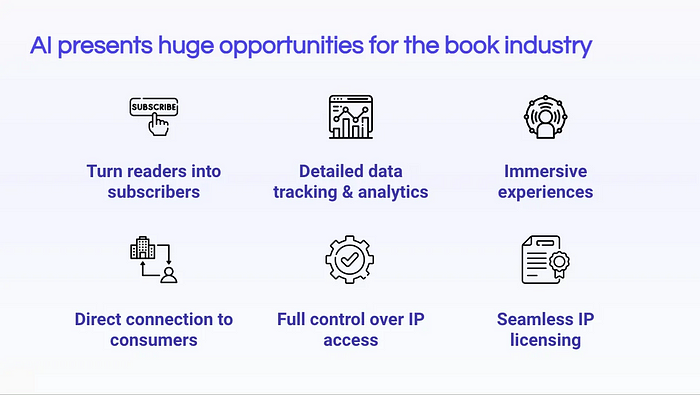
The central assumption of this vision is straightforward: if we change how book data licensing is conceptualized, and if we build the technological infrastructure to support it, the opportunities for both readers and publishers are extraordinary.
The Future of Books for Readers
AI Books for Recreational Readers
Imagine reading a novel with an AI companion by your side. Not replacing the reading experience, but enhancing it. You could:
- Ask the companion to summarize the last chapter you read before bed, so you can pick up right where you left off
- Get character motivation explained without spoilers
- Have the book read to you hands-free while you cook or commute
- Access contextual notes—historical references, foreign phrases, cultural context—without leaving the page
The reading experience becomes interactive, adaptive, and deeply personal—while the book itself remains exactly as the author intended.
Personalized Audio Narration
What if you could choose who narrates your audiobook? Not from a fixed list—but from a universe of AI-powered digital voice clones.
Imagine listening to a presidential biography narrated by Barack Obama himself—or at least, a licensed digital clone of his voice. Imagine a fantasy epic read by Michael Kramer—or Harry Potter narrated by Daniel Radcliffe.
Narrators could license their voices as digital assets, creating entirely new revenue streams. Listeners would have unprecedented control over their auditory experience. And publishers would unlock a new dimension of personalization that today's audiobook market can't touch.
AI Books in Early Education
For young readers, AI companions could be revolutionary. A child learning to read could have a tireless, endlessly patient reading partner that:
- Never loses patience, no matter how many times a word is repeated
- Adapts in real-time to the child's reading level and pace
- Translates words or passages into other languages instantly
- Provides encouragement and engagement without judgment
AI reading companions could democratize literacy instruction in ways we've never seen—particularly in underserved communities where access to tutoring is limited.
AI Books in Higher Education
Textbooks could become interactive platforms. Instead of passively reading a 400-page textbook, students could:
- Ask an AI tutor questions about the material in real time
- Get contextual explanations that connect current concepts to previously covered material
- Generate adaptive quizzes that test comprehension at personalized difficulty levels
- Receive real-time difficulty adjustments based on performance
The textbook becomes a living learning environment—not a static artifact.
AI Books in Business
The business applications of AI-powered books are vast and largely untapped. Here are several categories:
Book Summaries
Companies like getAbstract, Blinkist, and Headway have built entire businesses around summarizing books. But current licensing constraints limit the number of titles they can include. With improved licensing infrastructure, these platforms could legally incorporate vastly more titles, reduce per-title costs, and increase author compensation—all at the same time.
Professional Development & Consultants
Platforms like BookClub and Campfire are already building tools that magnify the impact of thought leaders and authors. With AI, an author's IP could extend far beyond the pages of their book—into interactive workshops, guided discussions, and digital tools that expand the scope and duration of their ideas.
Book-based Coaching
Consider an author like Jim Collins, whose books have shaped corporate strategy for decades. Now imagine a virtual coach, trained on Collins' entire body of work, that could provide personalized guidance to business leaders. Leaders at every level—not just those who can afford a $100,000 consulting engagement—could access frameworks like "Good to Great" in an interactive, contextual format. Meanwhile, Collins receives usage data and compensation that informs his future writing.
Corporate L&D Teams
Businesses could access customized training programs built from entire book libraries. Imagine an AI that could pull from hundreds of leadership, management, and industry-specific books to create tailored training curricula. Materials would be AI-contextualized—adapted to the organization's specific needs, industry, and culture—with case studies, exercises, and assessments generated dynamically.
The Future of Books for the Book Industry
License Content to Book-Based AI Applications
In this future, digital books function as ownable assets. Think of them like apps on your phone—you own the book, and you "plug it into" various applications, each with different business models and use cases.
Publishers would maintain full control over consent, credit, and compensation terms. They could enable specific use cases (coaching, summarization, education) while disabling others (reproduction, derivative works). The book becomes a platform, not just a product.
New Revenue Models
Publishers could build subscription services that mirror what we see in video streaming. Readers could subscribe to their favorite authors or imprints—gaining access to entire libraries, author communities, and exclusive content.
Brandon Sanderson's record-breaking Kickstarter campaign—which raised over $41 million—demonstrated the appetite for direct author-to-reader models. With the right infrastructure, this could become the norm rather than the exception.
Fine-Grained Licensing Controls
Publishers could track precisely who uses their IP, how it's being used, and where. They could disable applications that make them uncomfortable. They could set different terms for different platforms. And standardized licensing agreements could dramatically accelerate what currently takes months of negotiation into days or hours.
Unprecedented Data Access
For the first time, publishers could access real-time sales data, consumer engagement patterns, and usage analytics at a granular level. Which chapters are most referenced? Which concepts generate the most questions? Which books are being used together? This data could reveal market gaps, predict reader preferences, and help publishers identify and commercialize significant ideas faster than ever before.
Participation in Secondary Book Markets
Today, when you buy a physical book, you can resell it, lend it, or donate it. Digital books offer none of this. But they could.
Imagine a world where digital book ownership enabled resale markets—where publishers participated in every secondary transaction. Compare Libby (library lending with no publisher revenue after initial purchase) with Audible (locked to a single platform). Neither model serves publishers well in the long run.
Now imagine a sharing economy for books—modeled after platforms like AirBnB (rent your property), Turo (rent your car), TaskRabbit (rent your skills), and Fiverr (rent your expertise). Readers could lend, rent, or resell their digital books, and publishers would participate in every transaction.
Limited-Run Digital Prints
Physical books have limited editions. Digital books could too.
Imagine JK Rowling hosting a virtual screening of a new Harry Potter story—a limited digital edition available to only 10,000 readers, with personalized author annotations, behind-the-scenes commentary, and exclusive access to a Q&A session.
Or imagine Jim Collins releasing a limited-edition digital version of his next book—priced at $100,000—that includes a year of access to his AI-powered virtual coach, personalized strategic assessments, and a private dinner with the author. Scarcity creates value, and digital scarcity is entirely achievable.
Digital Narration
Audiobook narrators could license their voices as digital assets. An acclaimed narrator could allow their voice to be used across hundreds of titles—with specific use-case restrictions—creating an entirely new revenue stream.
Parents could create AI narrations in their own voices, reading bedtime stories to their children even when they're traveling for work.
Direct Access to the Market
With robust tooling and infrastructure, publishers could build direct relationships with readers—bypassing the intermediaries that currently control distribution. The power would shift from platforms back to IP owners, where it belongs.
The Opportunities Are Limitless
Everything described above is technically feasible today or in the near future. The barriers aren't technological—they're structural. They're about standards, licensing, and infrastructure.
The question isn't "Can we build this?" It's "Will we build the foundation to make it possible?"
What Needs to Change to Enable This Vision
Six fundamental changes are required to unlock this future:
1. Establish Industry-Wide Licensing Standards
Right now, licensing book content for AI is like navigating a labyrinth blindfolded. Every publisher has different terms, different formats, different expectations. There's no common language, no shared protocol.
This is a solved problem in other industries. Banking has standardized transaction protocols. Airlines have standardized booking systems. The web itself was built on standards created by the W3C.
Publishers should form consortia—or join existing ones—to create standardized licensing agreements and protocols that simplify AI licensing while preserving IP control.
2. Secure Book IP with Public Advanced DRM
Books need to be secured with modern digital rights management that goes beyond today's limitations. Blockchain-based encryption could store books securely with full traceability. Smart contracts could dictate per-book access parameters, use permissions, and duration. Digital watermarks could track unauthorized distribution.
Consider how JK Rowling's legal team actively polices unauthorized fan fiction. Now imagine that enforcement happening automatically, at scale, through smart contracts that enforce the author's wishes without requiring an army of lawyers.
3. Create a Standard Digital Book Format
Today's digital book formats are fragmented and inconsistently structured. EPUBs, PDFs, proprietary formats—each with different capabilities and limitations. This fragmentation impedes developer innovation.

Think of Milwaukee's battery platform. They created a single battery standard that powers over 200 tools. Any tool that uses the M18 battery works with every M18 battery. This interoperability drove an explosion of innovation—both from Milwaukee and from third parties.
A standard digital book format would do the same for publishing. Developers could build applications knowing that any book in the standard format would work with their tools. Publishers could distribute content knowing it would be compatible across platforms.
4. Simplify Access to Book Content
Accessing book content for AI applications should be as simple as OAuth is for web applications.
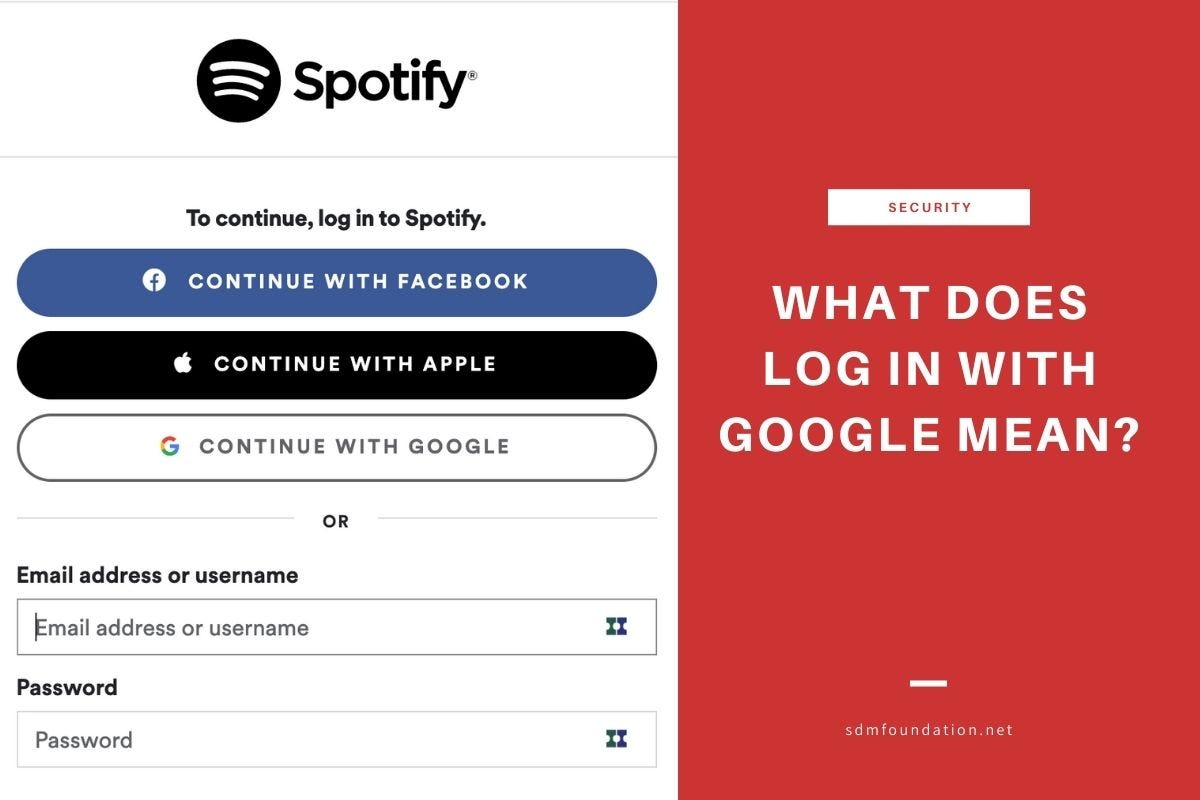
When you sign into Spotify with your Google account, Google doesn't give Spotify your password. It gives Spotify a token that says "this person is who they say they are, and they've given permission for this specific access." The process takes seconds.
Book content access could work the same way. Applications could request publisher permission for specific use cases, with tiered consent at both the application level and the individual user level. The publisher retains control. The user gets seamless access. The application gets the content it needs.
5. Develop New Payment Models
The current book economy is binary: you buy the whole book, or you don't. But AI use cases demand more granular payment options.
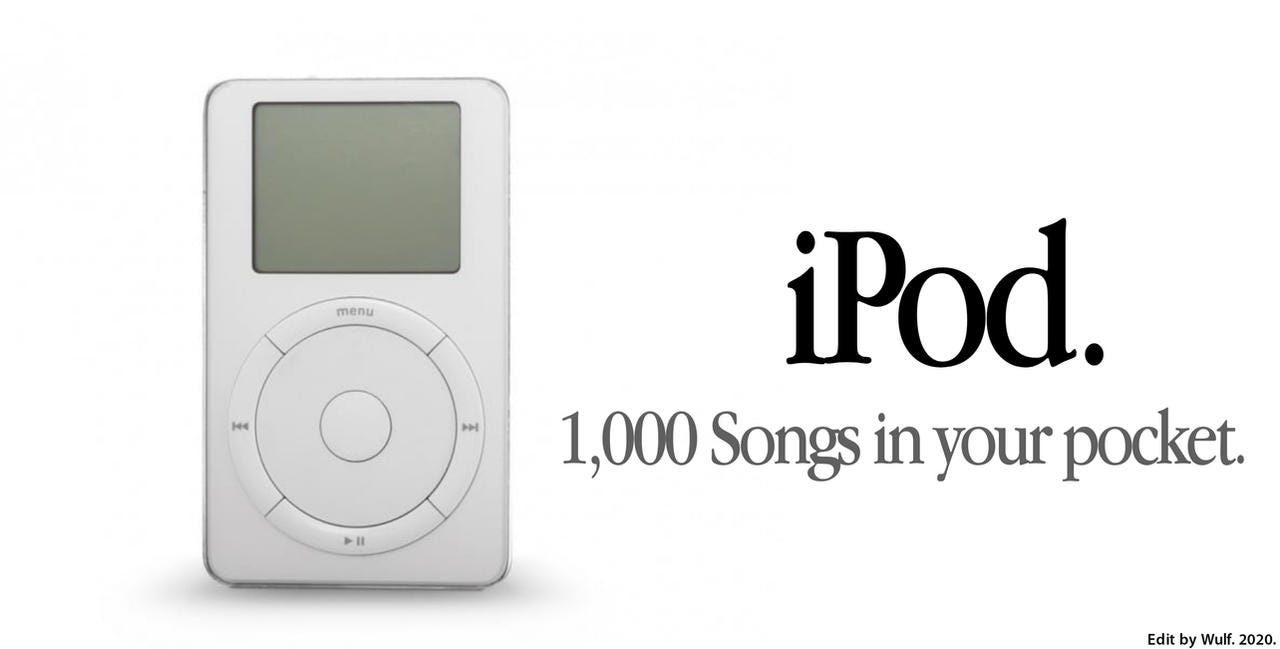
Think about what Apple did with iTunes and the iPod. Before iTunes, you had to buy an entire album for $15-20. iTunes let you buy individual songs for $0.99. This didn't destroy the music industry—it transformed it and ultimately led to the streaming revolution.
Books need the same evolution. Micro-payments for chapter access, per-query fees for AI retrieval, subscription models for author libraries, usage-based pricing for educational contexts—all of these should be possible.
6. Empower Digital Book Ownership
When you buy a physical book, you own it. You can write in it, lend it, resell it, display it on your shelf, and pass it to your grandchildren. It appreciates in value over time. A first edition Harry Potter can sell for hundreds of thousands of dollars.
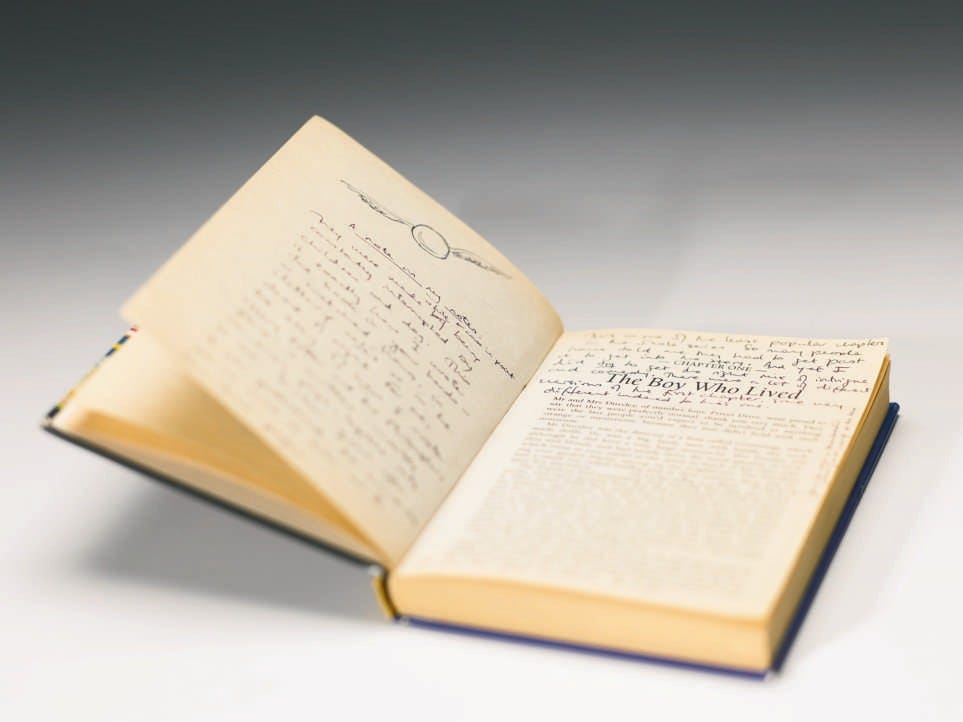
When you buy a digital book today, you own almost nothing. You can't resell it. You can barely lend it. It has no collectible value. If the platform shuts down, your library disappears.
Digital books deserve true ownership—with all the rights and possibilities that physical ownership implies. Annotation, lending, reselling, gifting, collecting, appreciating—all of it should be possible in digital form.
Additional Considerations
This vision intentionally focuses on opportunity rather than risk. There are legitimate concerns about AI-generated content, deepfakes, author consent, and more. These deserve serious attention and will be addressed in future writing.
The point of this series has been to demonstrate that the future of books and AI is not a zero-sum game. With the right infrastructure, the right standards, and the right mindset, everyone benefits—readers, authors, publishers, and technology companies.
Now What?
If you've read this far, you're exactly the kind of person who can help make this vision a reality. Whether you're a publisher, an author, a technologist, or an investor—your perspective matters.
Here's what you can do:
- Share this series with colleagues who are thinking about AI and publishing
- Connect with me on LinkedIn to continue the conversation
- Schedule a conversation if you want to discuss how your organization can be part of this future
The future of books won't be written by AI alone. It will be written by the people who choose to shape it.
Let's write the future together.
This is Part 4 of a 4-part series on AI and the Future of Book Publishing:
- AI and the Future of Book Publishing
- The Current State of AI and Publishing
- Why the Established AI Content Licensing Model Breaks with Books
- Vision and Call to Action for AI and the Future of Books
Companion article: A Beginner's Guide to Understanding Generative AI
Stay in the loop
Get the latest insights on AI, content licensing, and the future of publishing.